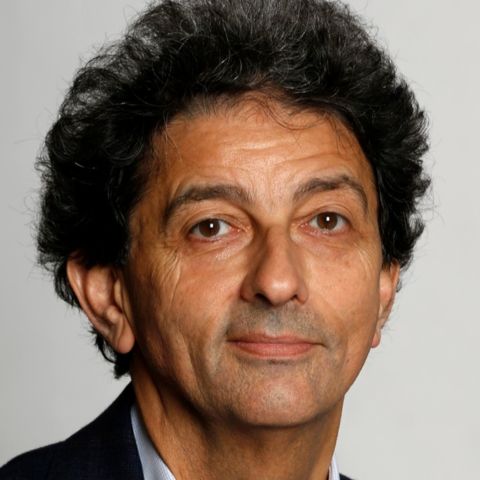
What is your assessment of the liberated company after inventing this philosophy in 2009 and introducing it in France in 2012 with the translation of your book? And to start with, could you remind us what it is?
Isaac Getz : Yes, it is a philosophy of organization whose concrete and co-constructed adoption gives employees the freedom and responsibility to take actions they believe are best for the vision of their company. Many quickly referred to the liberated company as a model. However, it is not a standard model but a philosophy based on a few general principles rooted in empirical research in psychology. These principles state that all human beings have the same universal and innate needs: trust, self-fulfillment, and autonomy.
This doesn’t mean, however, that these needs are satisfied in the same way across all cultures—whether national, regional, or corporate. Each company has a unique human, cultural, and organizational heritage. Therefore, each will co-construct a unique organizational mode to articulate the principles of the liberated company philosophy. Each of these concrete organizational environments can then be called a “model,” such as those of W.L. Gore, FAVI, Michelin, or Pôle Emploi. Each, by the way, has given a unique name to its own model. The confusion that the liberated company is a standard model has prevented many companies from transforming correctly because implementing standard models is antithetical to the co-construction of a unique organizational environment led by the company leader.
In political science, we clearly distinguish between democracy, which is a philosophy of organizing countries, and its implementations—there have been six democratic regimes in France and many more worldwide. But in management, there is little interest in business philosophies, with a preference for models instead. This desire for standard models is understandable but has harmed many business philosophies, from McGregor’s Theory Y to Deming’s continuous improvement. Like all these philosophies, the liberated company has collided with Taylorism, which leads companies to ignore the fundamental principles governing human and organizational functioning and instead seek ready-made processes and tools.
Were there criticisms of the liberated company, and is it still in vogue?
Isaac Getz : For the criticisms, of course: we are in France. But seriously, I initially feared that business leaders would be very critical, as was the case with McGregor’s Theory Y or the ideas of the Brazilian liberated company leader Ricardo Semler. However, this was not the case in France at all. The reception by business leaders was very positive. They even invited me to speak at conferences organized by MEDEF, CJD, and various industry federations. In 2014, I created a Google+ group that quickly grew to around 1,500 members—employees, managers, business leaders, HR directors, consultants, unionists—who actively shared ideas on how to increase the number of liberated companies. Many leaders said that this philosophy was common sense, that it was obvious that if a company created an organizational environment for the well-being of its employees, they would come to work not out of obligation but out of desire, and they would give their best. As a result, such a company would perform better.
Yes, a small group of militant critics appeared in the blogosphere around 2016, seemingly without any business leaders or employees among them. But this was not a big issue. On the contrary, it generated even more discussion on the topic. The liberated company received coverage in many media outlets, reaching the general public and employees. Our book with Brian Carney, “Freedom, Inc.,” which won the award for the best business book in 2013, became a bestseller, and about ten other books on the subject were written by different authors.
Today, there are nearly 400 liberated companies in France, more than in any other country, and each week, I learn about new ones, some of which have been around for several years. However, compared to the millions of traditional companies, claiming that the liberated company has become a trend in the business world is like saying that permaculture has become a trend in agriculture. The liberated company was trendy but never a fad.
On the other hand, we can be glad about this. When the liberated company was trendy, I saw some business leaders declare that their company was liberated. I even visited a few out of curiosity. I saw pleasant workspaces or that time clocks had been removed, but no change in the nature of the employees’ work or their relationships with managers. During this period, there were also proposals to certify “liberated companies.” With the circle of liberated business leaders, we then registered the trademark with that name precisely to prevent the inflation of display practices that any certification unfortunately causes.
I would add that we should not idealize the liberated company. It is very different from the traditional model and therefore requires a type of leadership without ego from the leader, which is not easy to practice. Additionally, despite its advantages and especially the well-being of employees, the liberated company does not suit everyone. In reality, a minority of employees prefer subordination and a boss rather than autonomy and a leader at their service. Like all employees, they deserve respect, provided they contribute to the collective work.
Yes, the liberated company has proven itself and continues to inspire, but it will never become a trend or the norm. The reason for this is the complexity of co-construction by an ego-free leader and willing collaborators of an organizational environment based on empowerment and individual initiative. How to design this co-construction and how to develop such leaders within the company are topics I regularly discuss.
Another concept you invented and launched in France is the altruistic company. Is this philosophy a continuation of the liberated company, or a completely separate concept ?
Isaac Getz : The liberated company can be seen as an organizational environment that unconditionally takes care of its employees by satisfying their universal psychological needs. The altruistic company, on the other hand, unconditionally takes care of the members of its ecosystem—clients, suppliers, the local community—and does so through authentic relationships with them. In both philosophies, there is this notion of unconditional care and the benefit of robust economic results as a consequence, not an end goal.
The two philosophies are also linked in another way. Those who, in the altruistic company, take care of the members of its ecosystem are the employees, and they will not do so if the company does not take care of them first. This idea is known as the symmetry of care, or “if the employee is happy, then the customer is happy, and if the customer is happy, the company is happy.” Again, many have said this is common sense. But as we have seen, co-constructing the organizational environment for the psychological well-being of employees is complex. The transformation of the “liberation of the company” type is one solution, although there are other approaches to creating this well-being. It is also complex to transform the core activities of the company to allow employees to unconditionally take care of its clients, suppliers, and the local community. Most often, we limit ourselves to CSR, which keeps profit maximization as the company’s ultimate goal. Alternatively, we adopt approaches aimed at balancing financial, social, and environmental goals, such as B-Corp or purpose-driven companies, among which research shows the financial goal is unfortunately prioritized.
This is not the case for the insurer MAIF. It illustrates well how its great care for employees enables the unconditional care for clients, partners, and local communities. Since the creation of the ranking for the best customer service in insurance, they have been number one every year for 19 years and number one across all sectors for the past three years.
How a company can distinguish itself from CSR and balancing approaches, and how it can transform to become a great force for social and environmental good and prosper as a consequence, are topics I am also discussing at the moment.